Industrial Utilities Automation
Industrial utilities support production through cooling, water circulation, compressed air, heat-transfer systems, pumping, ventilation, and other common services. Although these systems may sit outside the main process line, their availability directly affects production capacity, equipment protection, and site energy use.
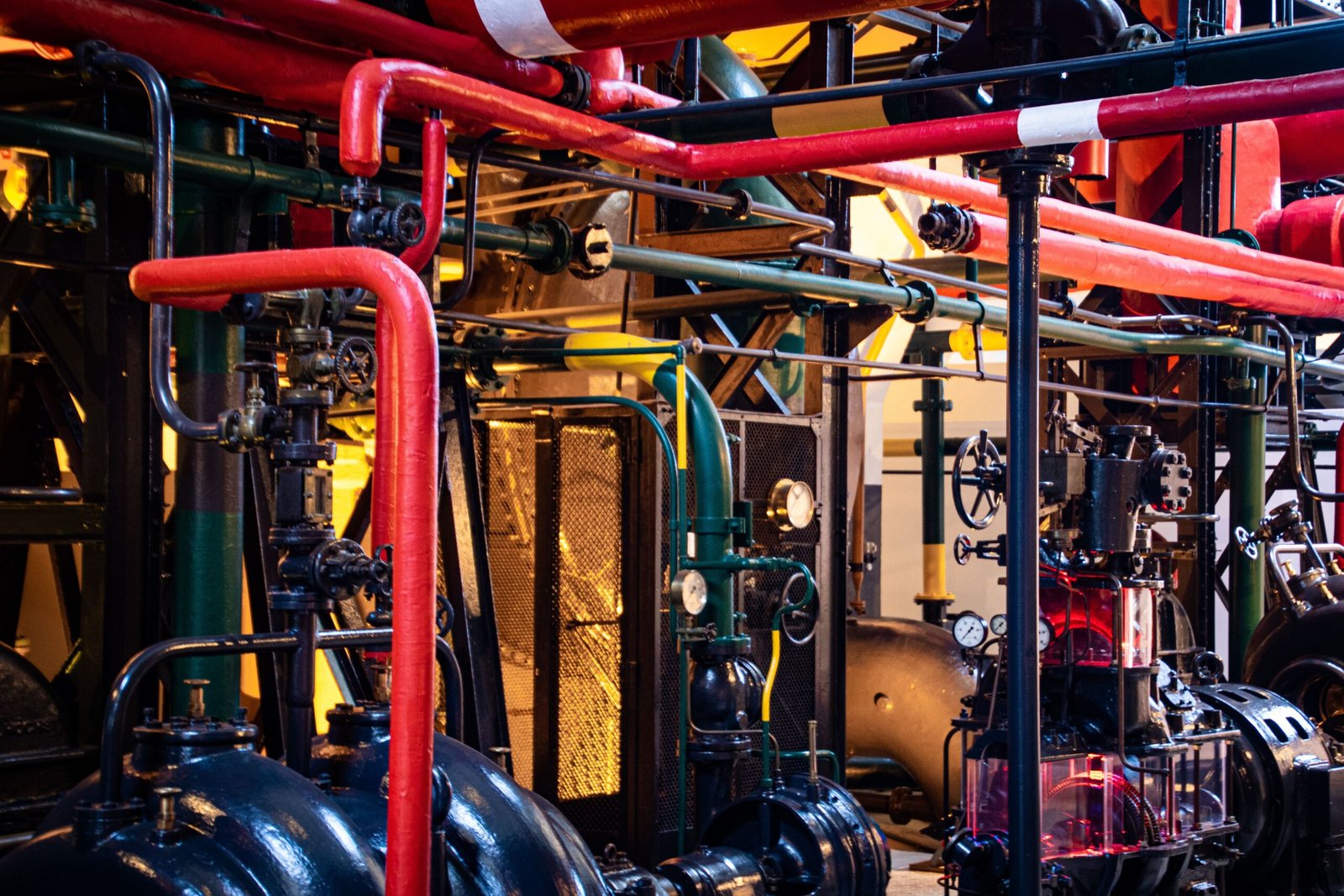
ECCT applies the same control-panel, PLC, HMI, instrumentation, and commissioning discipline used on process systems to utility equipment, scaled to the actual duty and criticality of the installation.
Utility Control Basis
The engineering basis identifies the utility demand, operating range, connected production users, equipment duties, redundancy requirement, control variables, start and stop criteria, and behaviour during partial equipment availability.
A cooling-tower system, for example, may coordinate circulation pumps, fans, basin level, make-up water, temperature control, VFDs, and duty rotation. A common pumping utility may need pressure control, lead/lag staging, minimum-flow protection, and automatic transfer. Ventilation or support systems may require temperature, pressure, differential pressure, or equipment-status integration.
The philosophy should define what the utility system controls independently and what it receives from production. Production demand may enable a utility stage, while equipment protection and safe local operation remain within the utility control design.
Panels, Drives, and Equipment Protection
Utility panels integrate feeder protection, starters or VFDs, control power, PLC or relay control, field terminals, and communication interfaces. Feeder selection follows the motor duty and process requirement.
VFD applications need defined control variables, speed limits, acceleration, local control, ventilation, and fallback behaviour if the controlling signal fails. Duty/standby equipment should rotate only among healthy, available units, with clear maintenance isolation and reduced-redundancy indication. Electrical trips, process interlocks, and command-source status remain distinguishable.
Instrumentation and Coordination with Production
Typical measurements may include temperature, pressure, flow, level, differential pressure, vibration or equipment diagnostics where included, and valve or damper position feedback. Each signal is assigned a defined use: control, permissive, interlock, alarm, monitoring, or reporting.
Interfaces with the production system are documented. A production line may need proof that cooling water pressure, air pressure, or another utility condition is available before starting. The utility system may need demand, area status, or production schedule information. These signals require clear ownership and defined behaviour if the connection is lost.
HMI and Supervisory Visibility
The HMI should present demand, active equipment, standby availability, key measurements, setpoints, command source, alarms, and reduced-capacity conditions. Where utilities share a wider SCADA system, the production-area tag, state, and alarm conventions should be maintained.
Selected trends may support analysis of pressure, temperature, staging, run hours, cycling, or energy-related operating patterns without overbuilding the system.
Testing and Commissioning
FAT verifies panel functions, equipment commands and feedback, selector modes, protection status, duty/standby or lead/lag logic, VFD interfaces, analogue scaling, alarms, and communication-loss behaviour.
Site commissioning confirms rotation, pressure or temperature control, equipment direction, valve or damper response, instrumentation, setpoints, production interlocks, and behaviour across the demand range. Final records capture the as-commissioned parameters, software, drawings, and operating limits.
Related Projects: Military Factory No.100 Cooling Towers
Related Services: Control Panels & MCC · PLC, HMI & SCADA · Commissioning & Startup